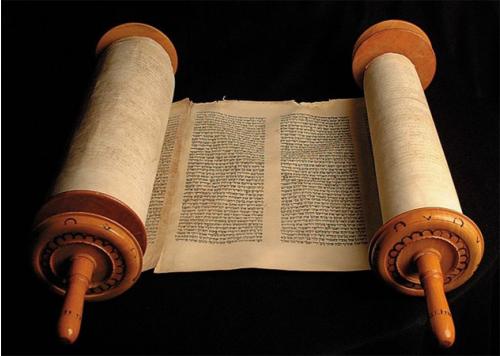
The Prophets were men called by God to serve as His mouthpieces during times of great spiritual and political crisis in Israel and Judah. Their messages generally followed a specific pattern: an indictment of sin (usually idolatry or social injustice), a warning of coming judgment (often the "Day of the Lord"), and a promise of future restoration.
The Major Prophets: A Foundation of Hope
•Isaiah: Often called the "Fifth Gospel," Isaiah contains more prophecies about Jesus than any other Old Testament book. It describes His miraculous birth (Isaiah 7), His nature as the "Prince of Peace" (Isaiah 9), and His death as the Suffering Servant (Isaiah 53).
○The Gospel Connection: Isaiah 53 provides the clearest Old Testament picture of Substitutionary Atonement—the idea that the Messiah would be "pierced for our transgressions" and that "by his wounds we are healed."
•Jeremiah and Lamentations: Known as the "Weeping Prophet," Jeremiah witnessed the destruction of Jerusalem. However, amid the ruins, he prophesied a New Covenant (Jeremiah 31).
○The Gospel Connection: Unlike the Old Covenant (the Law on stone tablets), the New Covenant would be written on people's hearts. Jesus explicitly stated at the Last Supper that His blood was the "blood of the new covenant."
•Ezekiel and Daniel: These prophets served during the exile. Ezekiel spoke of God giving His people a "new heart of flesh" and the Holy Spirit, while Daniel predicted the exact timing of the Messiah's arrival and the eternal nature of His kingdom.
The 12 Minor Prophets are "minor" only in length, not in importance.
•Hosea and Amos: Hosea used his own marriage to an unfaithful wife as a "living parable" of God's relentless love for unfaithful Israel. Amos focused on God's demand for justice for the poor.
•Jonah and Micah: Jonah’s three days in the belly of a fish were used by Jesus as a sign of His own three days in the grave. Micah identified the exact city of the Messiah’s birth: Bethlehem.
•The Post-Exilic Prophets: Haggai, Zechariah, and Malachi encouraged the returning exiles. Zechariah famously predicted the Messiah’s "Triumphal Entry" into Jerusalem on a donkey (Zechariah 9:9).
Reason for 2-Page Text
- The two-page summary was chosen because of the in-depth description of all the prophets and examples of scripture, and found the included Gospel connection.